
Fix problems as they happen
We help you read off-centre clay, uneven walls and collapsing forms while you work.
Technique before guesswork
Clear guidance helps you understand each stage instead of relying on trial and error.
Useful for repeat practice
Coming back to the wheel helps you build more even, reliable forms over time.
Learn what the wheel is asking you to do
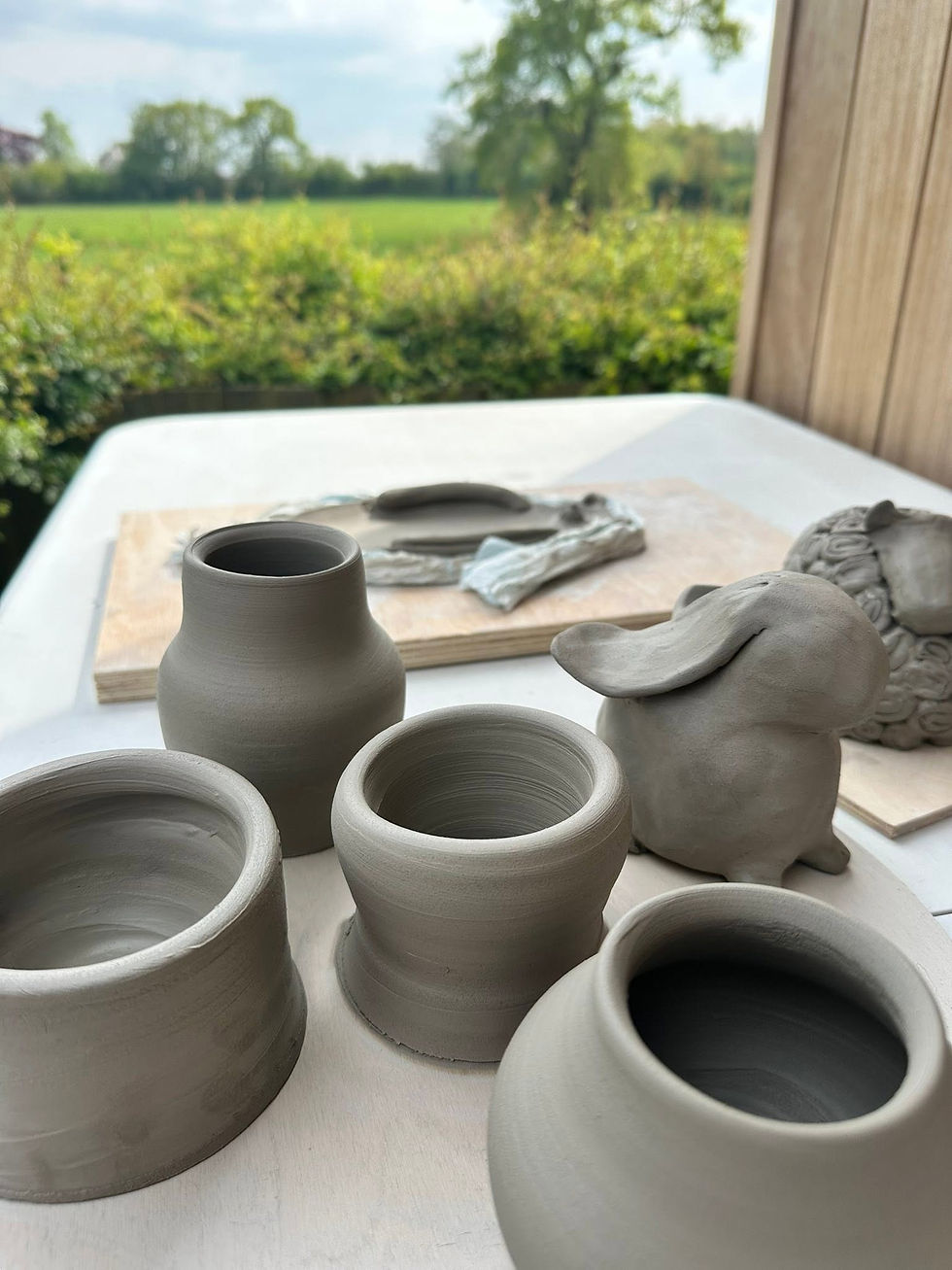
Our wheel throwing classes in Nantwich focus on the coordinated skills that make the wheel start to feel manageable. We guide you through centring the clay, opening it, pulling the walls and controlling the shape, explaining not just what to do but why it works. If the clay runs off centre, the walls thicken unevenly or the form collapses, we help you spot the cause and change the pressure, position or timing that led to it. The aim is sound technique, not just a lucky result.
Practice that turns awkward moments into understanding
Wheel work can feel unpredictable at first, especially when your hands are trying to do several things at once. That's why we treat mistakes as useful information rather than a setback. With repeated wheel time, you begin to recognise how the clay responds and how to correct it earlier. Our classes suit people who want purposeful making, steady improvement and a clearer sense of how to repeat a form with more control from one session to the next.
Frequently asked questions
What do you teach in wheel throwing classes?
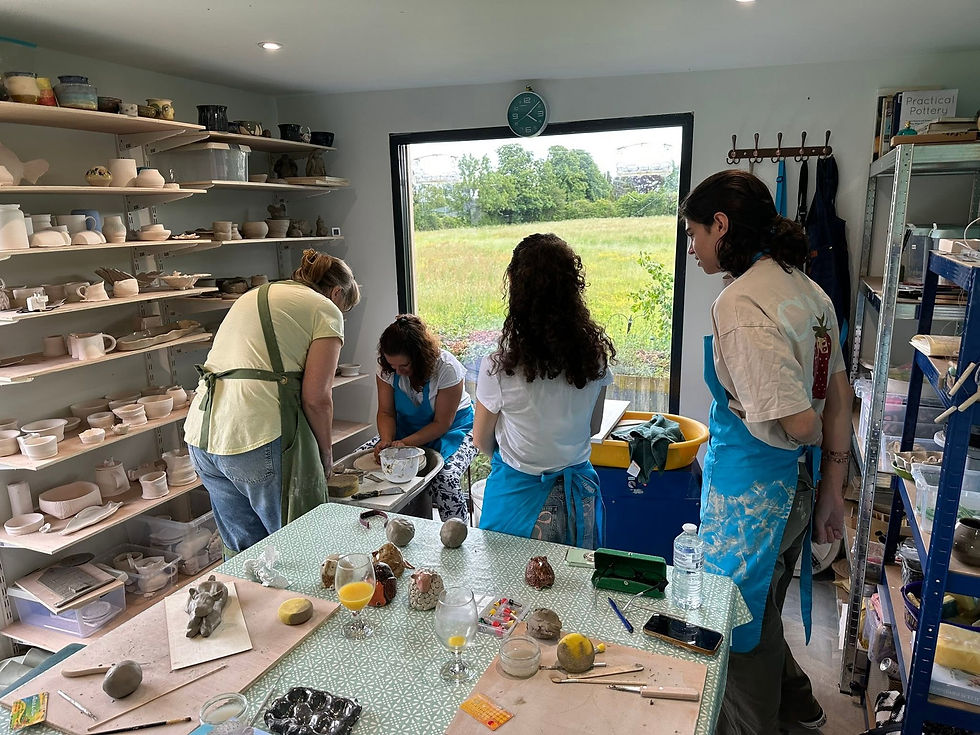
We cover the core stages of throwing on the wheel, including centring, opening, raising the walls and shaping the form. As you work, we explain what your hands are doing, what the clay is showing you and how small changes can improve control.
Why does my pot keep going off centre?
This usually comes down to centring, pressure or hand stability. We watch closely and help you adjust the position of your hands, how firmly you work the clay and when to ease off. That immediate feedback is often what makes the process start to click.
Are wheel throwing classes only about the finished piece?
No. The finished form matters, but the bigger aim is learning technique you can repeat. Some sessions feel more like skill-building than perfect pot-making, and that's normal. A stronger method gives you a better base for future work on the wheel.